Field notes10 July 20266 min read
The desk is a tool, not a shrine
Buying the right lamp is not work. A visit to four studios, and a note on what people who actually produce things tend to have in common.
By June Okafor, Staff writer
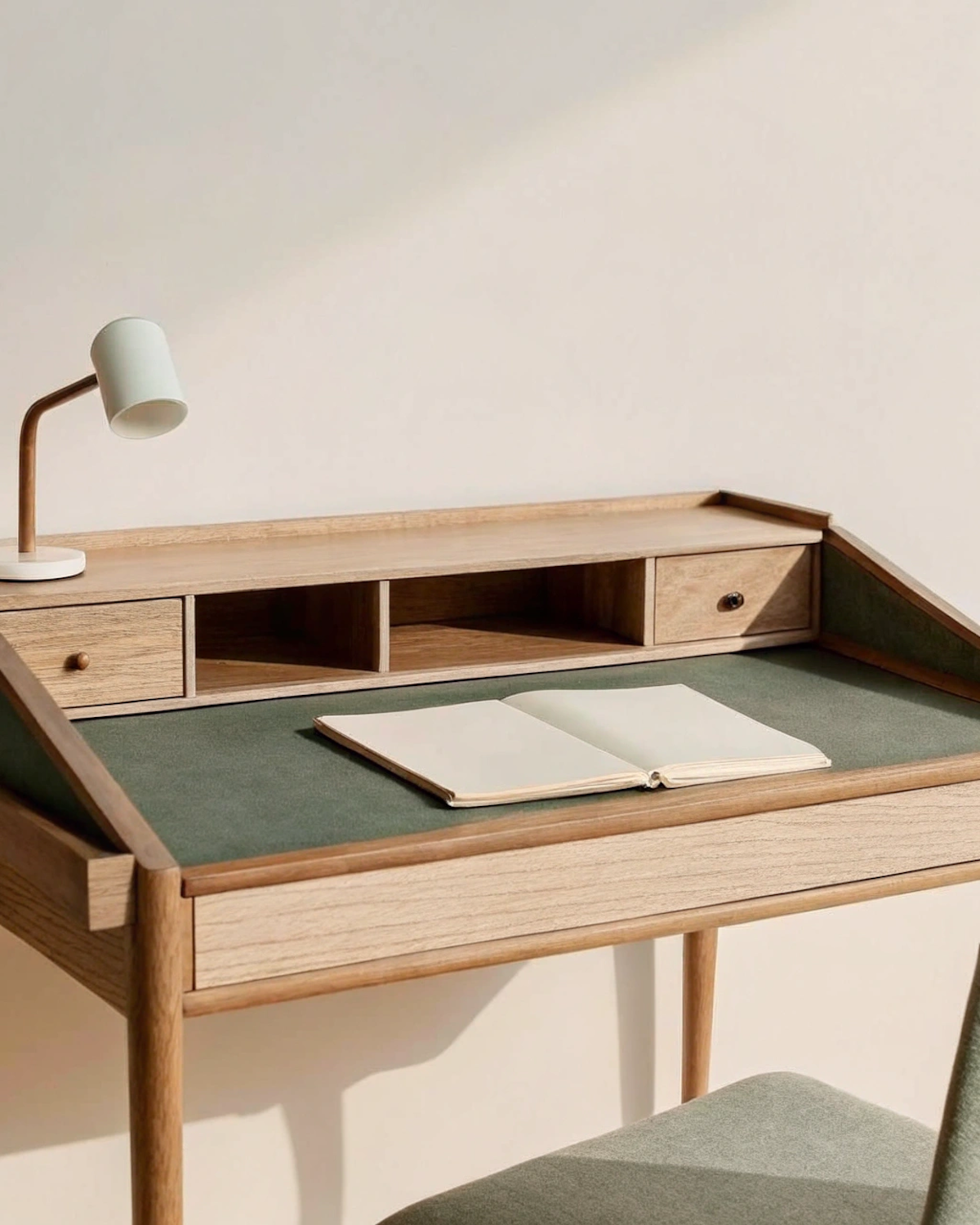
I spent a month visiting people at their desks, expecting to find a pattern in the equipment. There is a pattern, but it is not the one the photographs suggest.
Nobody good has a perfect setup
The most productive desk I saw belonged to a translator who has published nine books. It is a dining table. There is a stack of paper on it, a mug that predates her career, and a lamp with a bulb slightly too bright for the room. She has never once thought about it.
The most beautiful desk belonged to somebody two years into a project with nothing finished. This is not a rule, and I would not have believed how neatly it kept repeating.
What did keep repeating
- A surface large enough to spread out on, and nothing else competing for it.
- One place where the current work lives, always the same place.
- A hard stop, usually imposed by something external: a school run, a class, a dog.
- Very few decisions. Same chair, same hours, same first task.
The setup should be boring enough that it never becomes the subject.
Optimising the room is a way of not starting
Rearranging is satisfying because it produces visible change for no risk. Real work produces almost no visible change for hours and then risks being bad.
If you notice yourself researching chairs, the honest question is what you are avoiding, and the answer is usually sitting on the desk you already own.
Buy the one thing that hurts
A caveat, because the argument can go too far. Everyone I met had spent real money on exactly one thing, always the thing that caused daily physical discomfort: the chair, the screen height, the light in a dark room.
Fix the thing that hurts. Then stop, and go and use the desk.